The Fragile Miracle: How the Universe Almost Didn’t Make Us
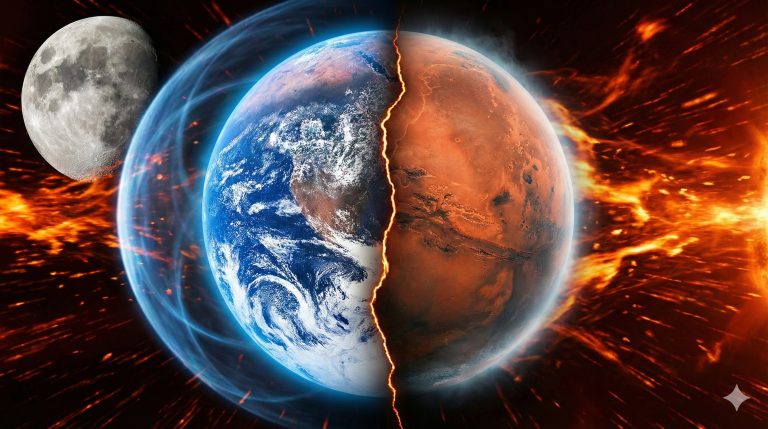
In the grand sweep of cosmic history, one truth stands out with unsettling clarity: the universe is not built for us. We are not its purpose or its protagonists. At best, we are a temporary anomaly, an improbable spark in a cosmos overwhelmingly hostile to life. And yet, improbably, here we are, conscious, fragile, and briefly illuminated, trying to make sense of a universe that almost never allowed us in. This fragile miracle of existence, our unlikely emergence from a violent and indifferent universe, is the central theme of this exploration.
This series, Lucky at Cosmological Scale, is an exploration of that staggering improbability: the razor-thin corridor through which life threaded itself across 14 billion years of chaos. Today, we begin with the numbers, the scale of the cosmic haystack, and the terrifying frequency with which the lights almost went out.
The Haystack: Finding Home in the Void
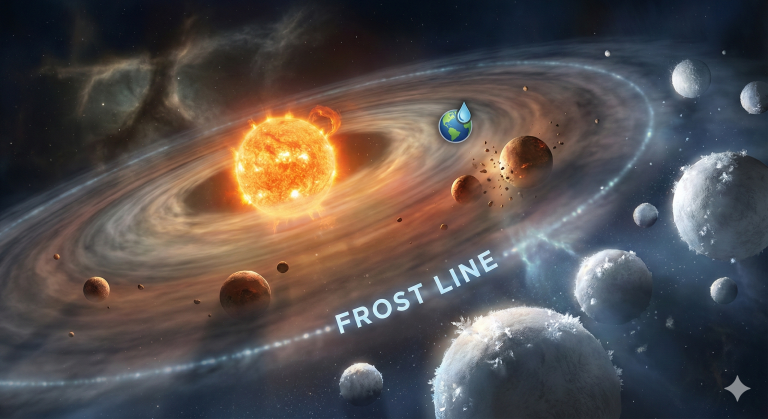
To understand our luck, we must first confront the scale of our isolation. Astronomers estimate that the observable universe contains around 10²⁴ planets, a million trillion worlds (1). For perspective, that is 10,000 planets for every grain of sand on Earth. And yet among this cosmic expanse of gas giants, lava spheres, rogue planets, and frozen wastelands, we have confirmed intelligent life on only one. A statistical fragile miracle, or a warning about how rare consciousness may truly be.
Surviving the Killing Fields
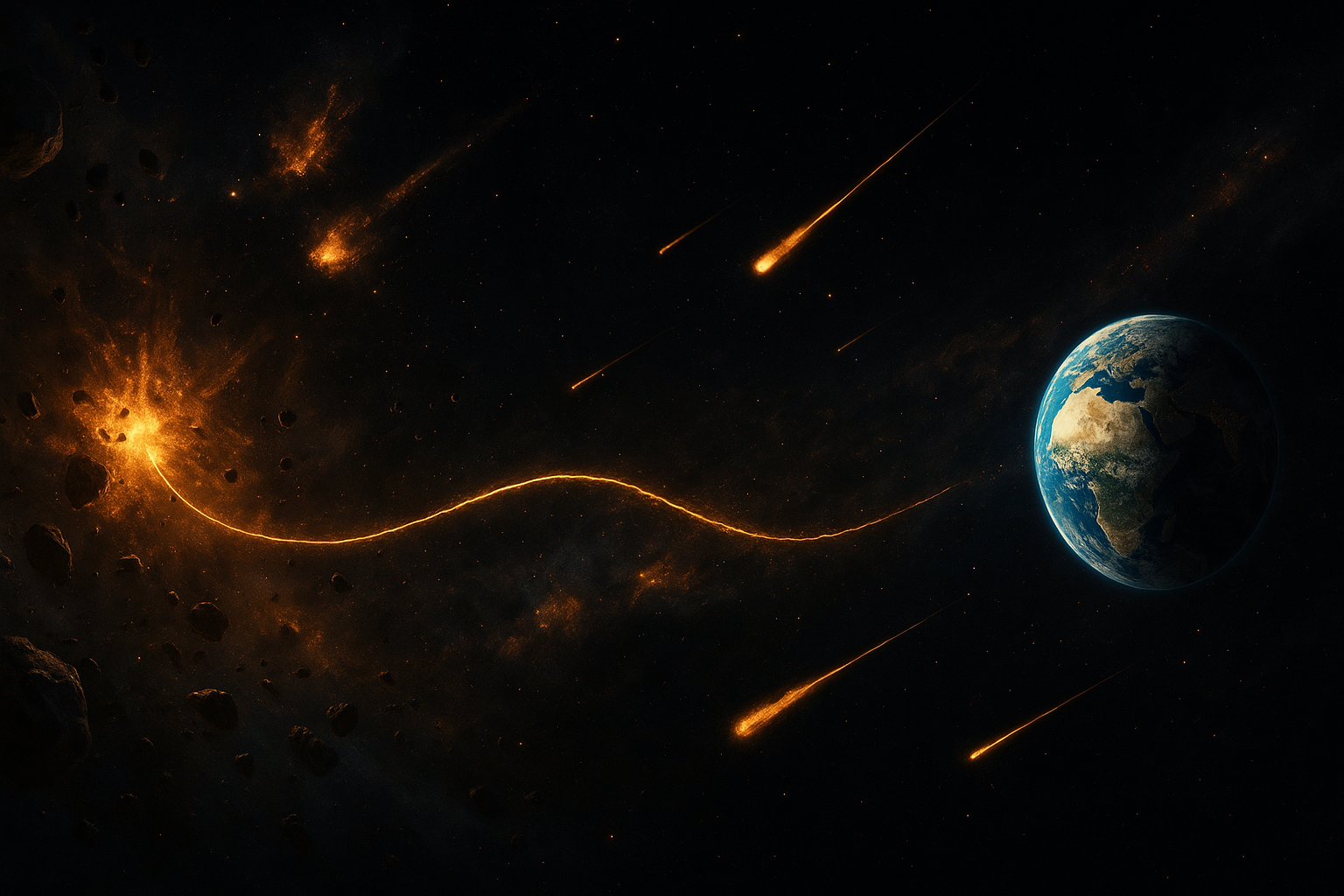
Finding a planet is just the first hurdle. Keeping life alive on that planet is much harder. We live in a universe that doesn’t seem to root for life, quite the opposite. The universe is a minefield of extinction: supernova shockwaves, lethal radiation, asteroid collisions, runaway climates, continent-scale volcanism, and glaciations that nearly froze the oceans solid.
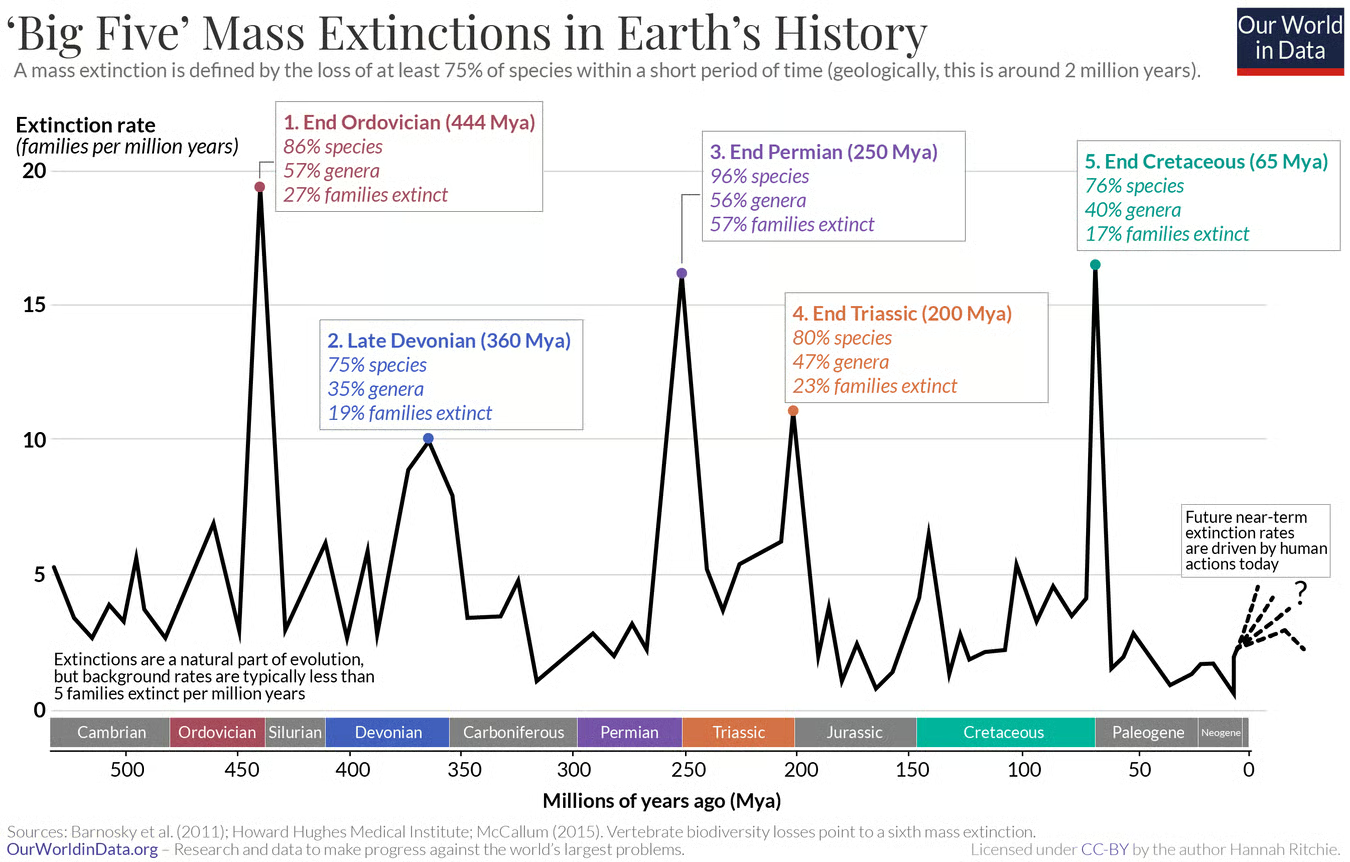
Over the last 500 million years, Earth has endured five mass extinctions, each erasing over 75% of species. One—the Permian catastrophe—wiped out 96% of life. At every branch point, destruction was more likely than continuity. A slightly larger asteroid, a slightly longer volcanic winter, a slightly different ocean chemistry—and humanity’s evolutionary branch would never have formed. We exist because an unbroken line of survivors made it through conditions designed to erase them.
The Long Road to Consciousness
Dodging asteroids was only half the challenge. Biology itself had to solve an almost impossible series of puzzles:
- Organic molecules forming in deep-sea alkaline vents:
- The emergence of LUCA, the Last Universal Common Ancestor
- The rise of complex cells after billions of years of bacterial stasis
- The leap to multicellularity
- Nervous systems, then brains, then the neocortex—the organ reading these words
Nick Lane calls the gap between bacteria and complex life an “evolutionary black hole.” No intermediates remain. Complexity emerged once in four billion years. We are the descendants of that singular, fragile experiment.
A Pale Blue Perspective
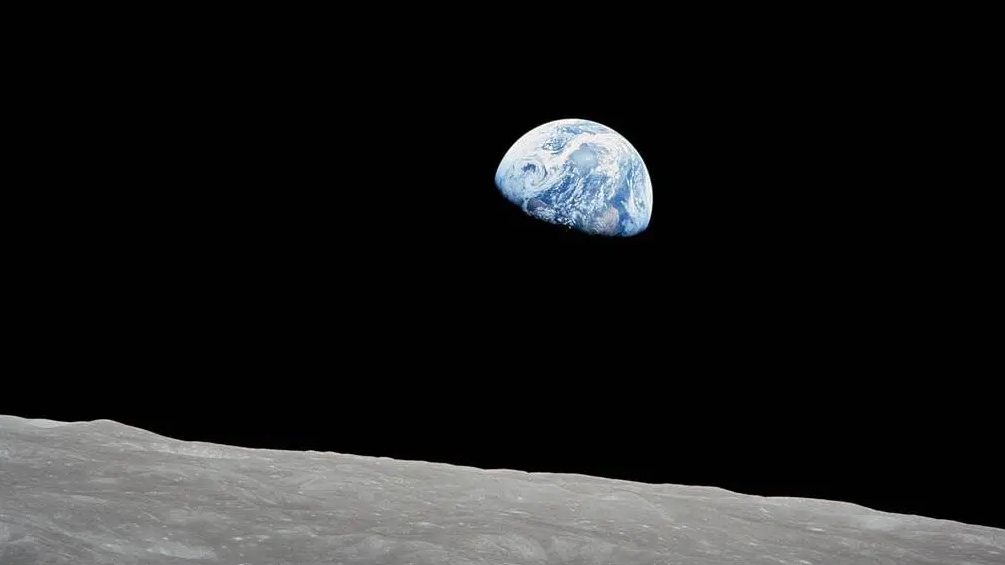
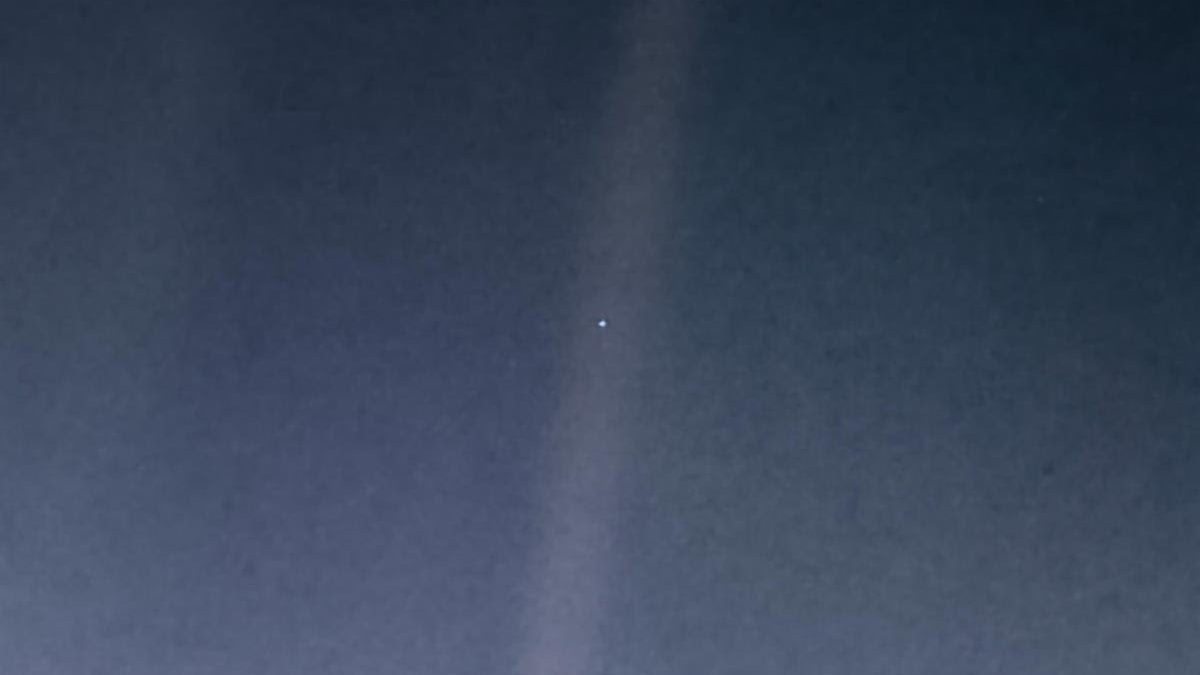
In 1968, Apollo 8 captured the first Earthrise; a blue disk rising above the lunar horizon. A decade later, Voyager 1 sent back the Pale Blue Dot; Earth suspended in a sunbeam from the edge of the Solar System. These images reshaped humanity’s self-perception.
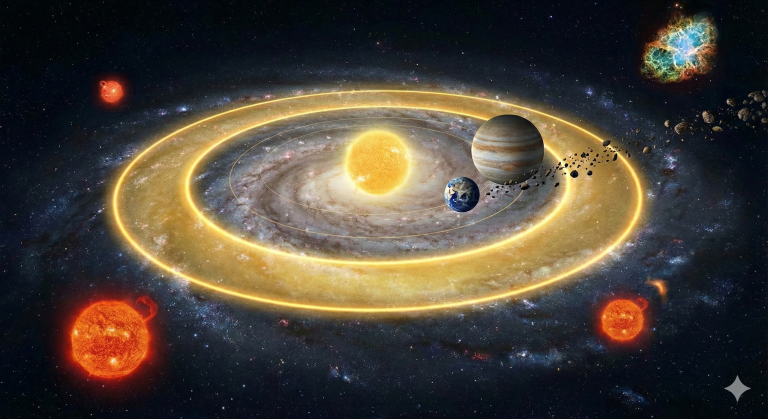
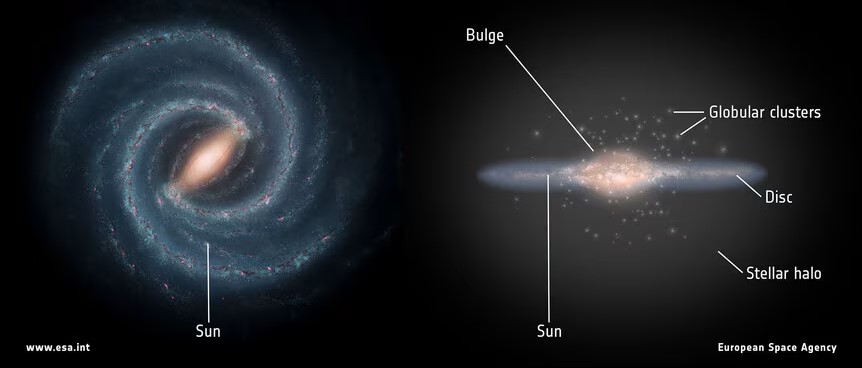
Zoom out again: the Sun itself is a nondescript star tucked into a minor spiral arm of the Milky Way, a galaxy 100,000 light-years across. In a cosmic census, we would not stand out. Our significance exists only because we assign it.
The Duty of the Survivors
We are currently facing a new wave of challenges. Society is grappling with the ethics of next-wave technologies: gene editing, cloning, human-computer interfaces, and artificial general intelligence. Viewed against 4 billion years of precarious survival, ethical debates, though essential, must be paired with a deeper imperative: the preservation of life capable of meaning. Homo sapiens will not be the final chapter of intelligence. But if we fail to navigate the coming centuries, there may be no future intelligence at all. The only rational collective human goal must be the preservation and flourishing of intelligence.
What Comes Next?
In this blog series, Lucky at Cosmological Scale, we will examine the critical turning point where the odds were steep, the outcome uncertain, and the consequences profound. We will explore not only what had to go right, but also what could have so easily gone wrong. Here are the “Goldilocks” miracles we will explore in the next posts:
- Cosmic Foundations: How supernovae forged the carbon in your DNA and the iron in your blood.
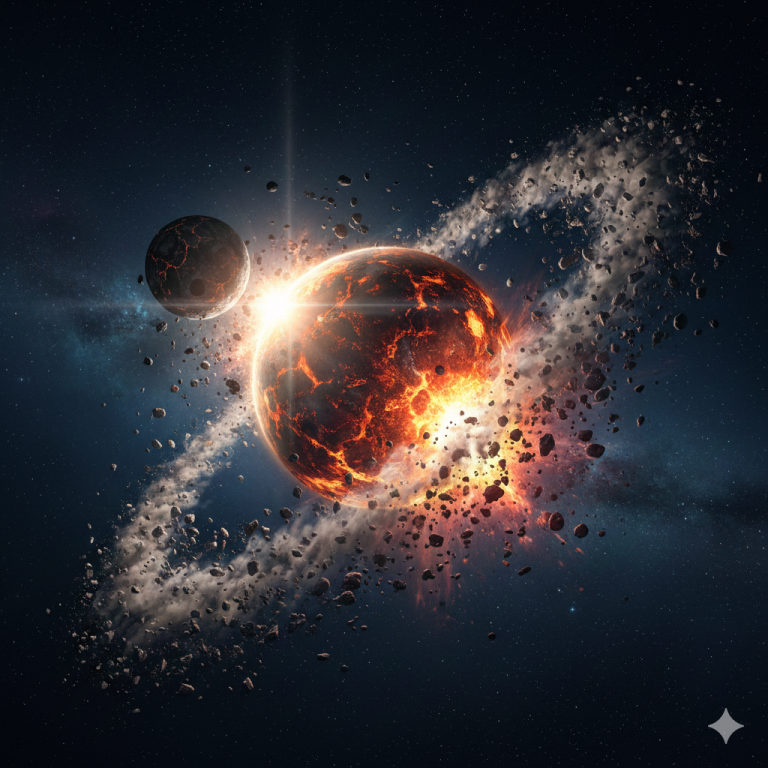
- The Moon-Forming Impact: Why a collision with the Mars-sized Theia stabilized Earth’s climate and may have sparked early life.
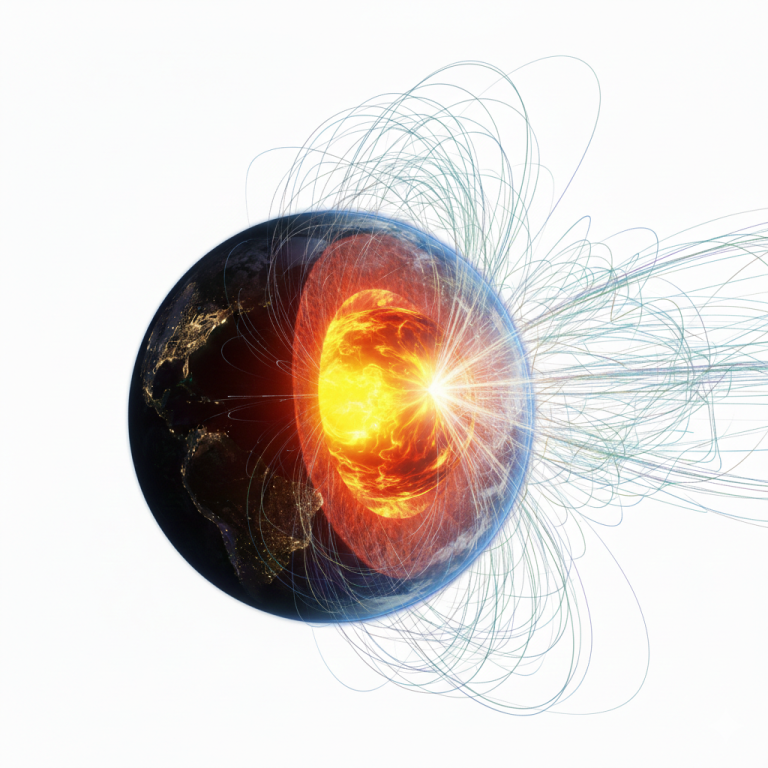
- The Magnetic Shield: How our liquid-metal core generates an invisible force field that prevents our atmosphere from being stripped into space.
- The Spark of Life: Why deep-sea alkaline hydrothermal vents provided the electrochemical gradients needed for the first metabolism.
Our existence remains a fragile miracle, one that invites humility, curiosity, and responsibility as we look toward the future. We will ask, again and again: if the tape of life were replayed, would we still appear?
References
- NASA. Star Basics.
- Hannah Ritchie (2022). Big Five.