Earth’s Early Oceans: Beyond the Hellscape
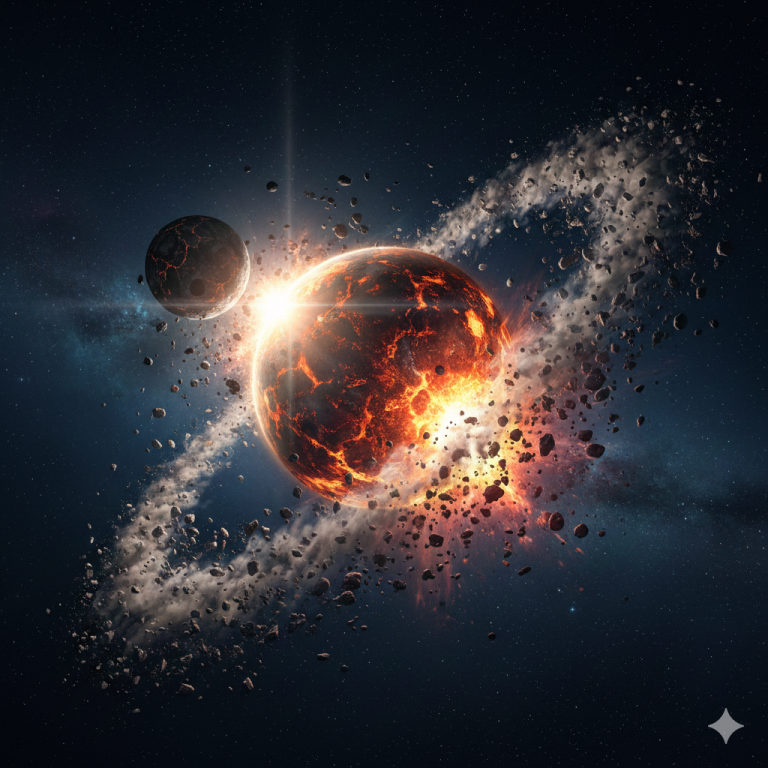
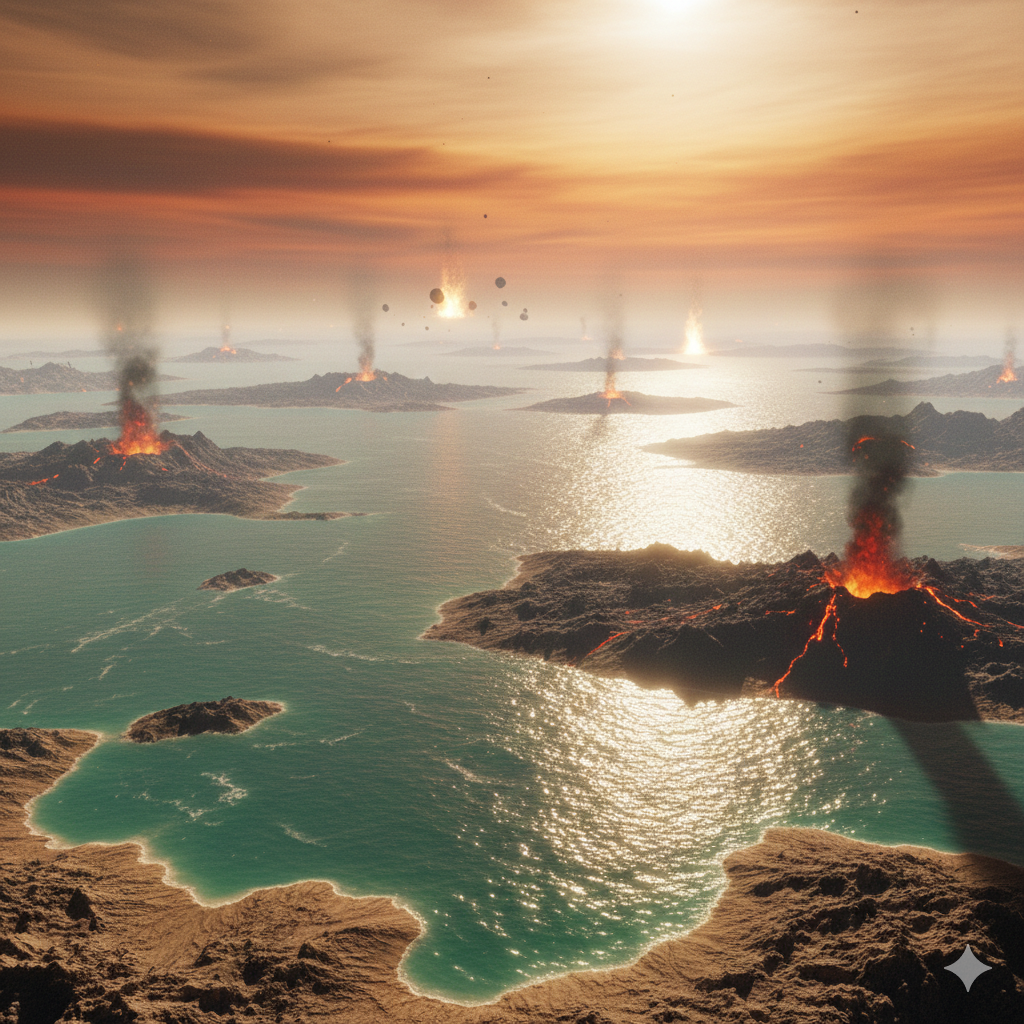
Understanding the deep history of Earth’s Early Oceans & Origin of Life requires us to look past the traditional ‘hellscape’ myth of the Hadean eon. Imagine Earth 4.5 billion years ago, a swirling ball of molten rock, constantly bombarded by asteroids. This is the popular image of the Hadean eon, a period often referred to as a “hellscape.” But what if that image is wrong? Growing evidence suggests a far more temperate early Earth, one cradled by liquid oceans surprisingly soon after its formation. These early oceans are not just a scientific curiosity; they are fundamental to understanding the origin of life and the unique habitability of our planet.
How Zircon Crystals Prove the Existence of Earth’s Early Oceans
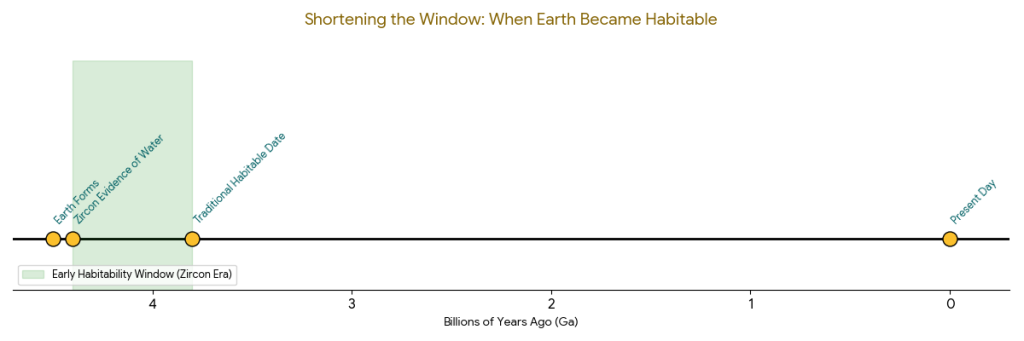
For decades, scientists envisioned the Hadean Earth as a fiery inferno. However, this picture is being challenged by tiny time capsules: zircon crystals. These hardy minerals, found in places like the Jack Hills of Western Australia, have survived billions of years and contain valuable clues about Earth’s early environment. Analysis of these zircon crystals suggests the presence of liquid water as early as 4.4 billion years ago, just a few hundred million years after Earth formed [1]. This implies that the Earth cooled rapidly, and liquid water oceans were likely present during the Hadean eon, creating a potentially habitable environment much sooner than we once believed.
Water: The Universal Solvent for Life
What makes water so crucial? Its unique chemical properties. Water is a polar molecule, meaning it has a slightly positive end and a slightly negative end. This polarity allows water to dissolve a wide range of substances, earning it the title of “the universal solvent.” This ability is essential for life because it allows molecules to dissolve, mix, and react within aquatic environments. The dissolved ions and molecules provide the building blocks and energy sources for life’s complex chemical reactions. The presence of liquid water is not merely desirable for life; it’s arguably a necessity.
The Origin of Earth’s Oceans: A Cosmic Question
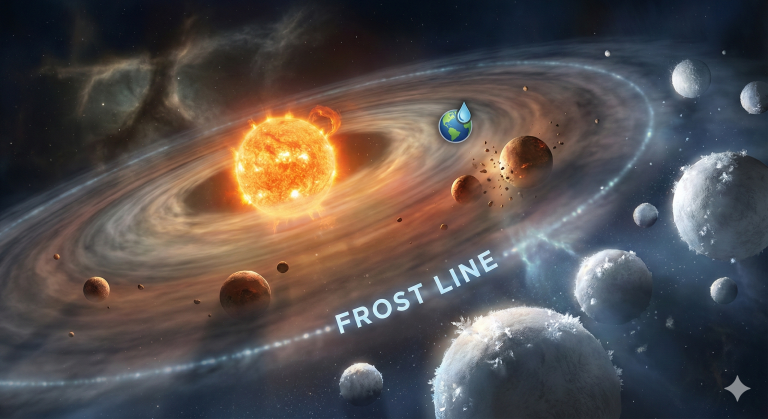
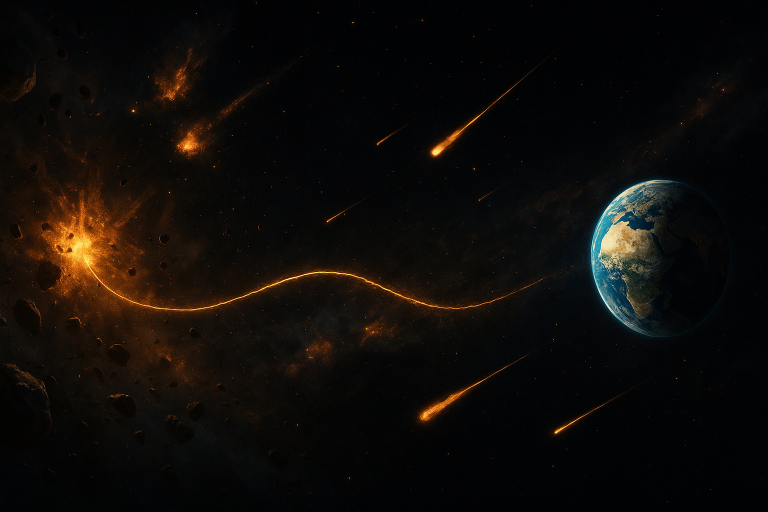
Where did all this water come from? This question continues to fuel scientific debate. Two main hypotheses are currently in play. One suggests that Earth’s water was delivered from outer space via icy comets and asteroids bombarding the early planet [2]. The other posits that water was outgassed from Earth’s mantle during volcanic activity [3]. Isotopic analysis of comets and asteroids provides clues, but a definitive answer remains elusive. Perhaps a combination of both internal outgassing and external delivery contributed to the formation of Earth’s oceans. The origin of oceans is a complex puzzle scientists are working hard to solve.
The Carbon-Silicate Thermostat: A Planetary Stabilizer
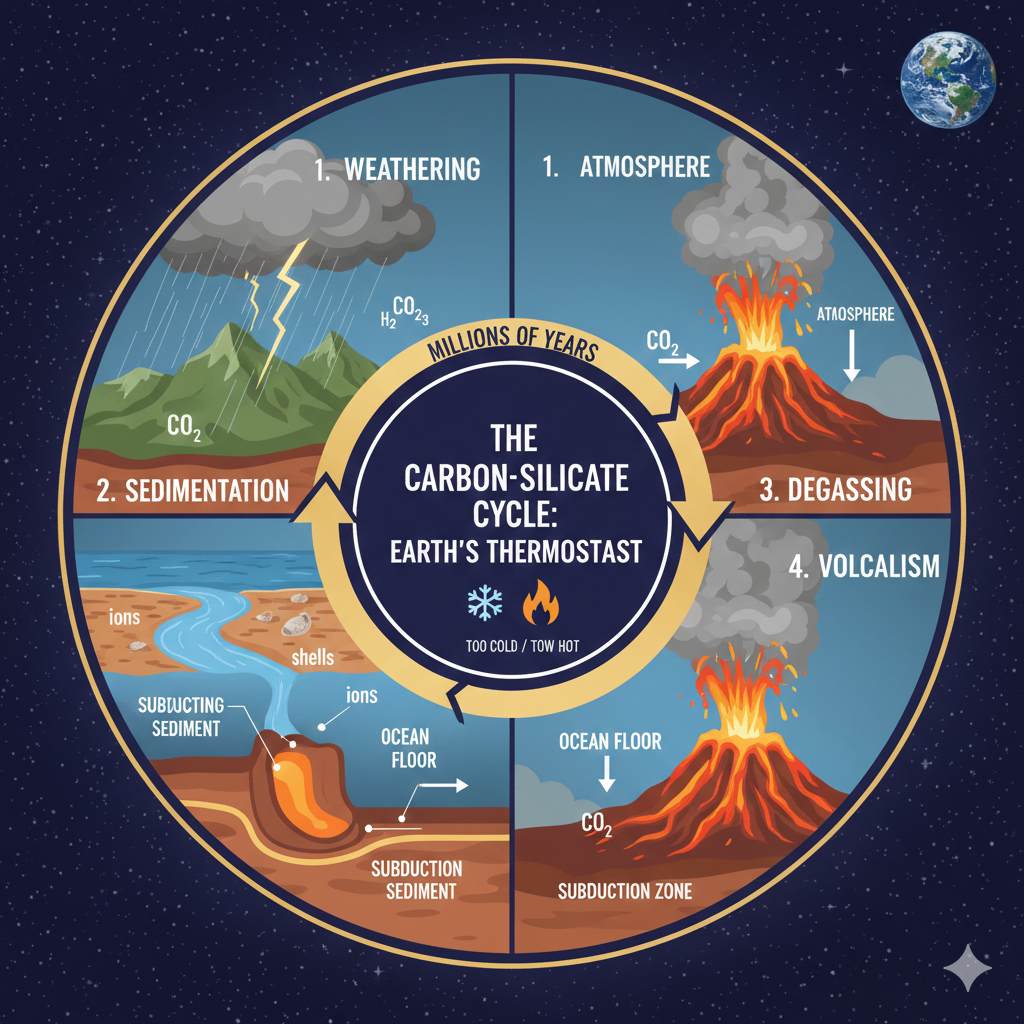
The presence of liquid water is only part of the story. What kept Earth from freezing over or boiling away? The answer lies in the carbon-silicate cycle, a crucial feedback mechanism that regulates Earth’s climate over long timescales. Here’s how it works: Liquid oceans enable the weathering of silicate rocks. This weathering process consumes carbon dioxide (CO2) from the atmosphere, turning it into dissolved bicarbonate that is eventually sequestered in marine sediments. These sediments are subducted into the mantle where they are eventually released as CO2 through volcanic eruptions.
This cycle acts as a planetary thermostat, preventing runaway greenhouse effects like on Venus or runaway icehouse conditions like on Mars. The carbon-silicate cycle’s effectiveness hinges on the presence of liquid water, highlighting its critical role in maintaining Earth’s Early Oceans & Origin of Life.
Immediate Habitability: Earth’s Early Head Start
If Earth had liquid water oceans relatively soon after its formation, it suggests that the planet was potentially habitable much earlier than previously thought. This has profound implications for the origin of life. It means that life could have emerged relatively quickly once the conditions were right. While the exact timing of life’s origin is still unknown, the presence of early oceans significantly shortens the window of opportunity and suggests that Earth was primed for life’s emergence almost as soon as it cooled down.
Why this matters for intelligent life
The story of Earth’s early oceans is not just an academic exercise. It’s a crucial piece of the puzzle in understanding the emergence of life and the conditions necessary for its survival. While water is found throughout the universe in comets, moons, and interstellar clouds, liquid surface oceans that remain stable for billions of years appear to be exceptionally rare. Earth’s unique position in the solar system, combined with its specific atmospheric composition and the carbon-silicate cycle, created a rare environment where liquid water could persist for over 4 billion years.
This long-term stability is more than just a scientific curiosity; it is a fundamental requirement for the emergence and evolution of complex life. Because planetary habitability depends so heavily on liquid water, understanding these ancient geological and chemical processes helps researchers identify other potentially habitable worlds and highlights how rare life might truly be. Furthermore, studying the factors that have kept Earth’s climate stable for eons provides vital insights into how we might mitigate modern climate change and protect the future of our own civilization.
But water is not the only critical piece of the puzzle. The processes happening beneath the surface are just as crucial. In our next blog, we’ll dive into another essential element: the dynamic processes shaping our planet from within. Get ready to explore: Plate Tectonics: 7 Incredible Reasons It’s the Engine of Life
References
- [1] Valley, J. W., Peck, W. H., King, E. M., & Wilde, S. A. (2002). A Cool Early Earth. Geology, Vol. 30, No. 4, pages 351-354; April 2002.
- [2] Morbidelli, A., et al. (2000). Source Regions and Timescales for the Delivery of Water to the Earth. Meteoritics & PIunetary Science 35, 1309- 1320 (2000).
- [3] Elkins-Tanton, L. T. (2008). Linked magma ocean solidification and atmosphere growth for Earth and Mars. Earth and Planetary Science Letters, Volume 271, Issue 1-4, p. 181-191.